
By Saad Iqbal
It’s 5:40 a.m. on a Permian pad, and the completions engineer running tonight’s stage plan has one number stuck in her head: $340,000. That’s roughly what this single frac stage costs once you add proppant, pump time, and the chemical package — and the cluster spacing she locked in two weeks ago, sitting at a desk, not on location, decides whether most of that money goes into rock that actually drains or into a stress shadow next door that steals half the fluid. Get the spacing, perforation design, or pump schedule wrong on enough stages, and a $9 million well ends up paying for someone else’s porosity. This is exactly the decision AI hydraulic fracturing design tools were built to de-risk, and in 2026 there are real, working options — not vaporware — for engineers who want to stop guessing.
What AI Hydraulic Fracturing Design Tools Actually Do
Walk into any completions planning meeting in 2026 and someone will say the word “AI” at least three times, and they usually mean three different things. It helps to separate them before you shop.
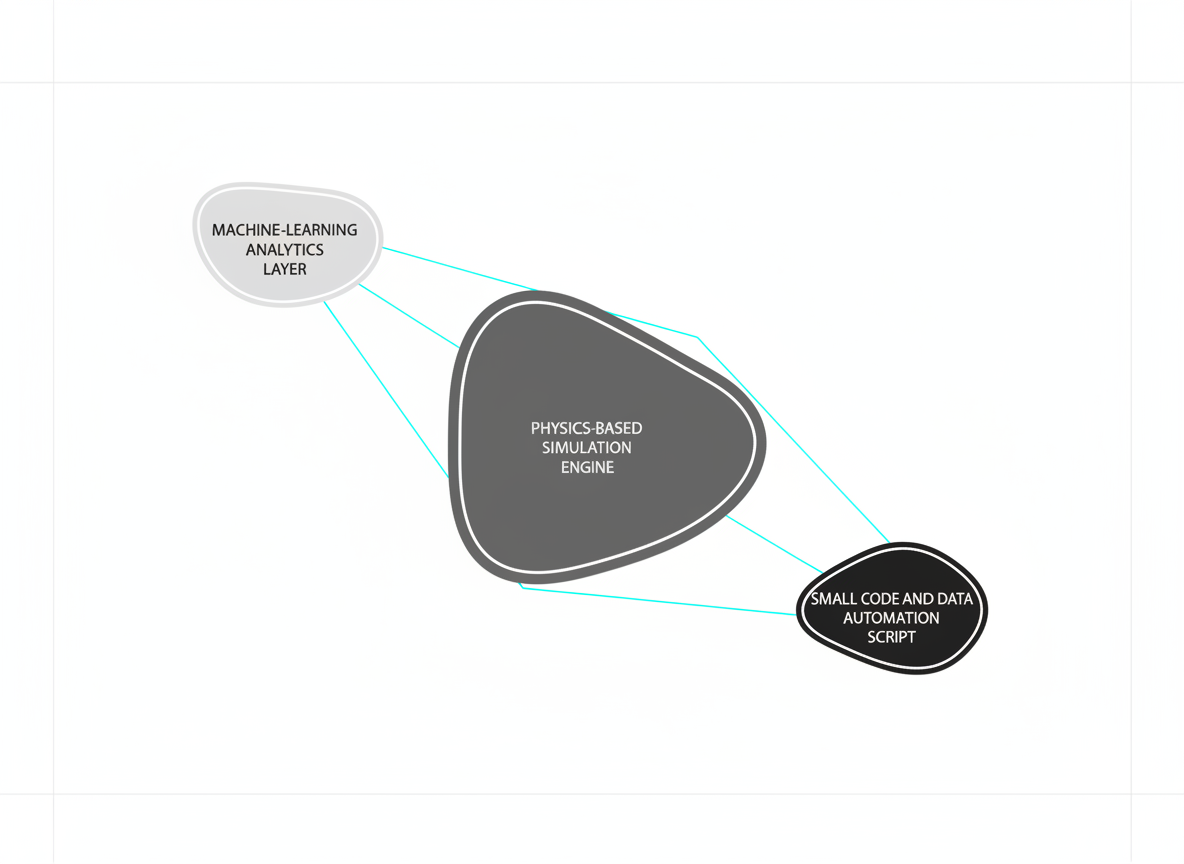
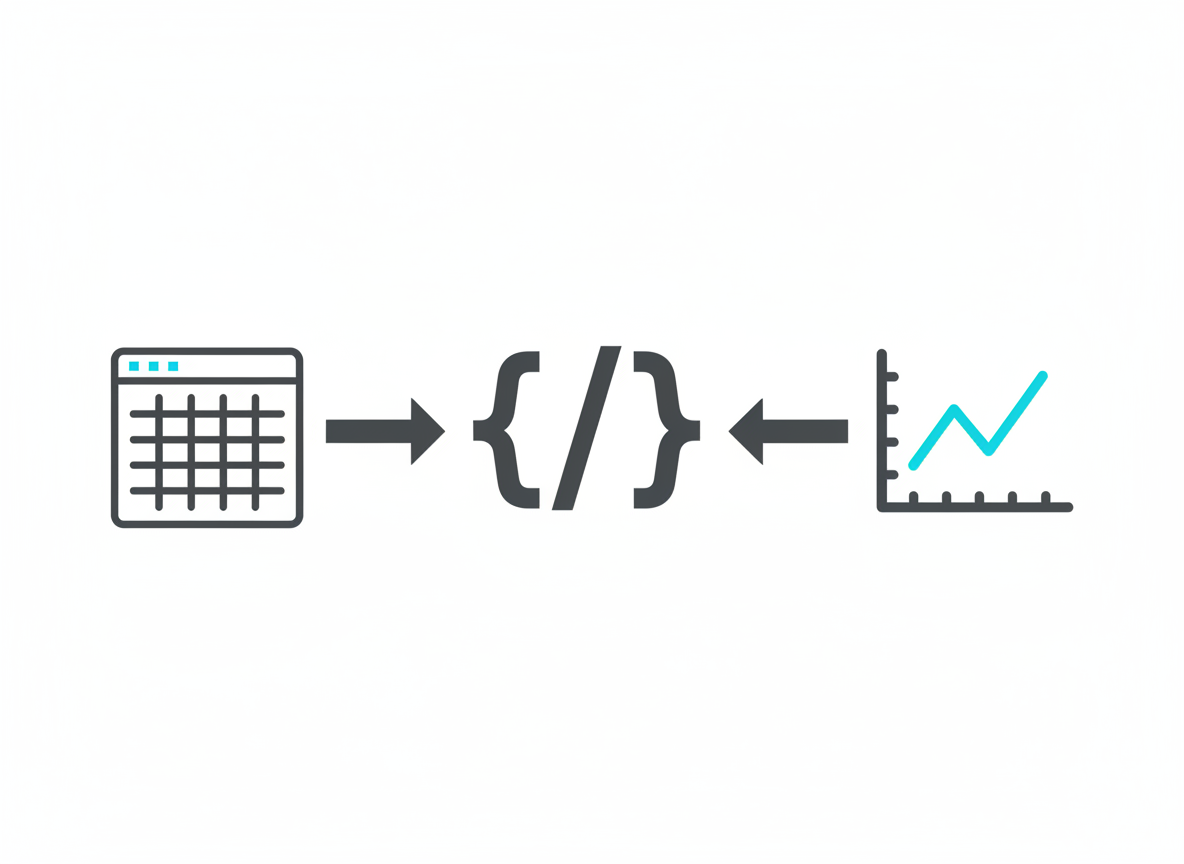
The first layer is physics-based simulation with optional data-driven calibration — software that models fracture propagation, proppant transport, and reservoir flow from first principles, then uses field data to tune the model rather than replace it. The second layer is machine-learning analytics built on top of thousands of historical completions, which never touches a fracture-mechanics equation but tells you, statistically, which cluster spacing and proppant loading outperformed across a basin. The third layer is the DIY layer: a Python script or spreadsheet that automates one specific calculation — friction pressure, breakdown pressure, proppant concentration — well enough to sanity-check a vendor’s number or get you through early-stage planning before you can justify an enterprise license.
Below are the real, currently available tools filling each layer, and where they actually disagree with the marketing copy.
ResFrac: A Coupled Fracture-Reservoir Simulator, Not a Black Box
ResFrac sits in the first layer, and it’s worth saying plainly: ResFrac is a physics-based simulator, not a machine-learning model, and the company is upfront that automated data-driven analysis is something it complements rather than replaces. What makes it relevant here is what it simulates in one coupled run — 3D fracture initiation and propagation, well-to-well stress-shadow interaction, proppant transport through non-Newtonian fluids and diverters, and multiphase reservoir flow with poroelastic and thermoelastic stress changes, all in the same model that carries a well from the frac through years of production. Because fracturing and production share one simulator, parent-child interference, refracs, and huff-n-puff EOR can all be modeled as one continuous history rather than stitched together from separate tools.
For completions design specifically, you enter casing, cluster locations, and perforation detail directly, and the model calculates perforation pressure drop and erosion dynamically rather than treating it as a fixed input — which matters because erosion is exactly what changes cluster-to-cluster fluid distribution over a stage. ResFrac’s own materials describe the standard workflow as kickoff, an initial run, a review of key observations, history matching against real pump and pressure data, then sensitivities — and a built-in sensitivity tool automates submitting and collecting that batch of runs instead of you doing it one simulation at a time.
It runs as a local Windows client with computation handled on Azure cloud servers, so you only need connectivity to submit a job and pull results. There’s no published pricing; ResFrac sells both self-service licenses and turnkey engineering support, and the company’s case studies cite production or ROI gains of 20% or more without claiming those numbers are guaranteed on your acreage.
Learn more and request access at ResFrac.

Novi Labs: Machine-Learning Analytics Layered on Real Completions Data
Novi Labs is the clearest example of the second layer: it never runs a fracture-mechanics simulation, and it doesn’t need to. Novi’s platform ingests public completions and production data — state agencies, the Texas Railroad Commission, FracFocus disclosures — and layers proprietary, non-public operator data on top, then runs what the company calls “dynamic ML models” through a Model Engine built for self-serve use (no coding, no model maintenance) to estimate well spacing and subsurface performance for both planned (PUD) and already-drilled (PDP) wells under different scenarios.
The practical use case: instead of pulling a type curve from the three or four closest analog wells, you get a forecast informed by the actual completions and spacing decisions of every comparable well Novi can see in the basin, public and private. The company explicitly positions this machine-learning forecast as an alternative to traditional type-curve construction, not a supplement to it — a real philosophical difference from how reserve forecasting has worked for decades, and worth testing against your own type curves before you trust it blind.
Novi doesn’t replace ResFrac’s physics. What it tells you, before you spend simulator time, is which spacing and completion designs are statistically winning across your offset operators right now.
Explore the platform at Novi Labs.
Where Stress Shadows and Frac Hits Change the Spacing Math
Here’s where the spacing decision gets genuinely hard: fracturing a child well too close to a producing parent doesn’t just risk a disappointing type curve, it risks a frac hit — fracture fluid and pressure communicating directly into the offset wellbore, sometimes damaging the parent’s own completion. ResFrac’s coupled model is built specifically to simulate that stress-shadow interaction before you drill, which is the whole point of running well-to-well cases instead of single-well ones.
But design-time simulation only gets you so far once the pumps are actually running. If you want to catch a frac hit in the field as it happens rather than finding out from a pressure chart afterward, that’s a monitoring problem, not a design problem — and it’s one EnergyMindAI has covered in depth in AI frac hit detection on multi-well pads, which walks through the anomaly-detection approach that flags communication in minutes instead of hours.
The same real-time pressure-signal logic extends to the treatment itself: a cluster plan that looks fine on paper can still screen out mid-stage, which is why it’s worth pairing any design tool here with early screenout-prediction monitoring once the job is actually pumping.

The DIY Python Layer: Build the Friction-Pressure Math Before You Buy Anything
Not every team is ready to license a cloud simulator or a basin-scale analytics platform, and you don’t need either to sanity-check the most basic number in frac design: friction pressure, the pressure lost to turbulence as fluid moves down casing or tubing before it ever reaches a perforation.
The governing relationship is the Darcy-Weisbach equation: ΔP = f × (L/D) × (ρv²)/2, where ΔP is friction pressure loss, f is the Darcy friction factor, L and D are pipe length and internal diameter, ρ is fluid density, and v is average fluid velocity, all in consistent units. For turbulent flow in a reasonably smooth pipe, the Blasius correlation estimates f from the Reynolds number: f = 0.316 / Re^0.25.
Here’s that math as a reusable Python function instead of a one-off spreadsheet cell:
import math

def friction_pressure_psi(rate_gpm, id_in, length_ft, fluid_sg=1.0, visc_cp=1.0):
    """Darcy-Weisbach friction pressure for turbulent, single-phase
    pump-down flow (illustrative slickwater estimate only)."""
    Q = rate_gpm * 6.30902e-5     # m3/s
    D = id_in * 0.0254            # m
    L = length_ft * 0.3048        # m
    rho = fluid_sg * 1000         # kg/m3
    mu = visc_cp * 1e-3           # Pa.s

    area = math.pi / 4 * D ** 2
    v = Q / area                  # m/s
    Re = rho * v * D / mu
    f = 0.316 / Re ** 0.25        # Blasius turbulent friction factor

    dp_pa = f * (L / D) * (rho * v ** 2) / 2
    return dp_pa / 6894.76         # psi

# 5.5 in, 20 lb/ft casing (ID 4.892 in), 9,000 ft of vertical + lateral,
# slickwater at 1,500 gpm (about 35.7 bbl/min)
print(round(friction_pressure_psi(1500, 4.892, 9000), 0))
For 1,500 gpm of slickwater pumped down 5.5-inch, 20 lb/ft casing (4.892-inch ID) over 9,000 feet of vertical-plus-lateral wellbore, this returns roughly 985 psi of friction pressure — a friction gradient of about 0.11 psi/ft, right in line with what field friction charts show for slickwater at moderate rates.
That number is useful, but it isn’t the whole answer. It ignores perforation pressure drop, proppant-laden multiphase friction once sand joins the fluid, and the pipe-roughness calibration real crews get from pump-in and flowback tests — precisely the gap ResFrac’s dynamic perforation-erosion model and real-time history matching are built to close. Treat this script as the five-minute check that tells you whether a vendor’s quoted treating pressure is in the right neighborhood, not the final word.
If you’d rather not maintain the function yourself, petropt packages this kind of PVT, IPR, and hydraulics math as an installable library, and both ChatGPT and Claude can turn a single-stage calculation like this into a batch script that runs across an entire pump schedule in a few prompts.
Which AI Frac Design Tool Should You Start With?
If you’re a two-person completions team without a simulator budget yet, start with the Python layer above — it costs nothing and it’ll teach you where the real engineering risk sits before you ever pay for software.
If you’re already drilling in a basin with dozens of nearby operators and want to know whether your spacing plan matches what’s actually winning on offset acreage, Novi Labs’ analytics layer answers that question faster than building your own type curves from scratch.
If you need to defend a specific cluster design, model a refrac, or understand exactly how close is too close to a producing parent well, that’s a physics question, and ResFrac is built to answer it with a coupled fracture-reservoir model rather than a statistical analogy.
Most completions groups end up running more than one of these in parallel, which is the honest answer nobody puts in a sales deck. For the pressure math behind all three, the related tutorial on hydraulic fracturing breakdown pressure and net pressure is a good next stop.
