By Saad Iqbal
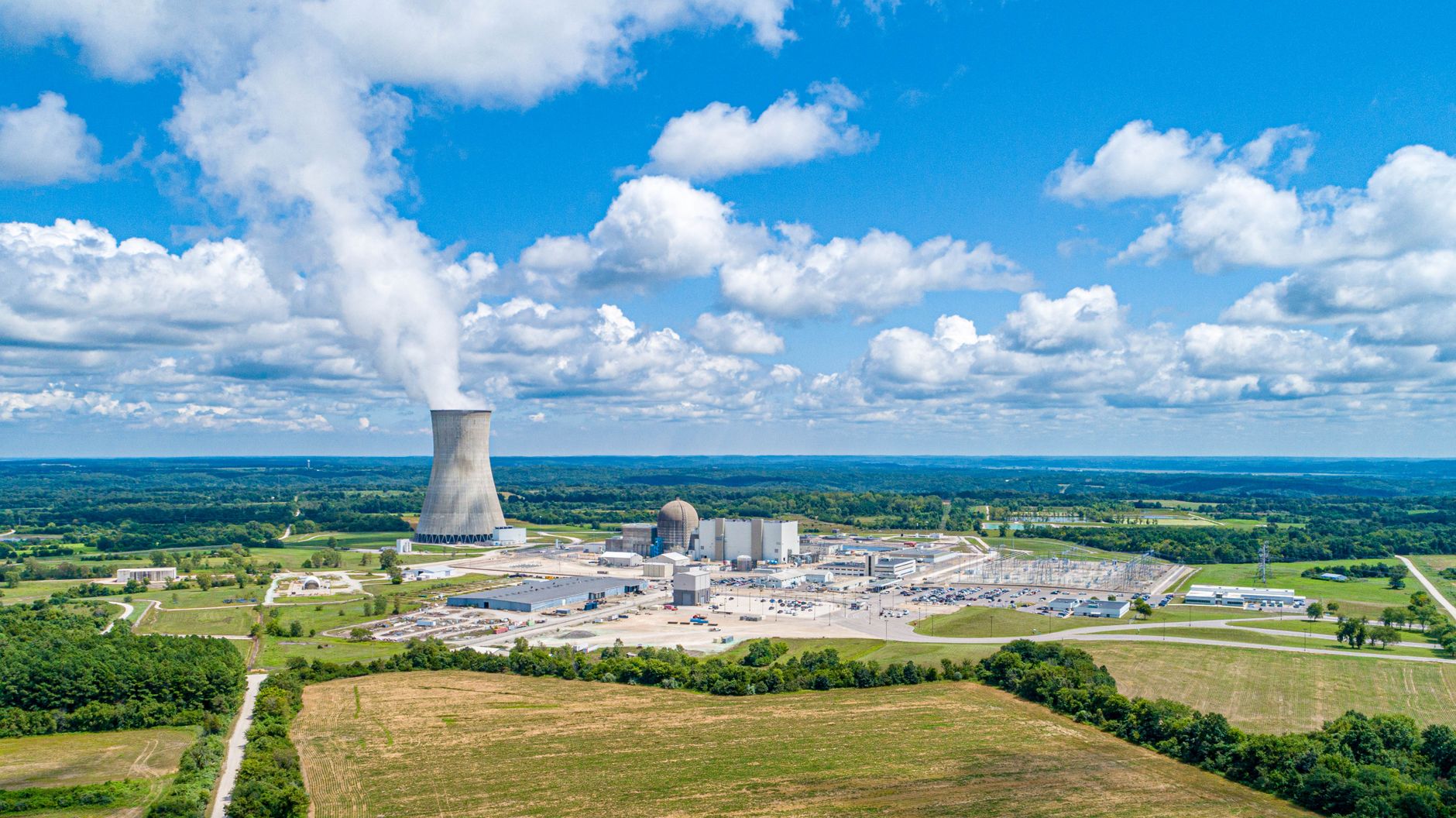
In September 2024, engineers began preparing to walk back into a control room that had sat silent for five years. The reactor is Unit 1 at Three Mile Island in Pennsylvania, undamaged and shut down in 2019 for purely economic reasons, sitting a few hundred meters from the Unit 2 reactor whose partial meltdown in 1979 became shorthand for everything that could go wrong with nuclear power. Now Microsoft wants what Unit 1 can produce: 835 megawatts of steady, always-on electricity, purchased to match the power its data centers draw from the regional grid. A plant once treated as a cautionary tale is being reopened as an answer to a different kind of pressure entirely.
That pressure has a name: artificial intelligence, and its appetite for electricity that never sleeps. Over the past two years, the four largest hyperscalers — Amazon, Google, Meta, and Microsoft — have all struck nuclear power deals to feed the data centers running their AI models. It is a strange pairing on paper: an industry built on split-second software updates leaning on a technology famous for decade-long construction timelines. But the logic, once you see it, is almost elegant. And like most elegant ideas, the reality underneath is messier than the headlines suggest.
The Deals Powering the Pivot
Start with what has actually been signed. Amazon has led a $500 million financing round for X-Energy, a developer of gas-cooled small modular reactors, with a stated ambition of at least 5 gigawatts of new nuclear capacity by 2039. It has also backed a four-unit, 320-megawatt project with Energy Northwest in Washington state and bought a data center campus in Pennsylvania that draws power directly from an adjacent nuclear plant. Meta announced in December 2024 that it was searching for a nuclear developer to supply up to 4 gigawatts of capacity. Google signed a 500-megawatt development agreement with Kairos Power in October 2024, backing a molten-salt-cooled reactor design with two demonstration units targeted for Oak Ridge, Tennessee, by 2030. And Microsoft’s Three Mile Island arrangement with Constellation Energy, the deal that reopened Unit 1, remains the most tangible of the group, because the plant itself already exists.
Add it up and the announced targets approach 10 gigawatts — enough, on paper, to power several large cities:
- Amazon — 5 GW target via X-Energy SMRs by 2039
- Meta — up to 4 GW sought from nuclear developers
- Microsoft — 0.835 GW, the Three Mile Island Unit 1 restart
- Google — 0.5 GW via Kairos Power molten-salt SMRs
Figures reflect publicly announced deals and targets as of mid-2026, not power currently delivered.
Why Nuclear, Why Now
To understand why any of this makes sense, it helps to think about electricity the way a physicist does: not as a commodity but as a rate. A data center training a large model doesn’t want a certain number of kilowatt-hours delivered sometime this month. It wants a fixed, enormous flow of power, every hour, every day, indefinitely, because idle GPUs are as expensive as running ones and a training run interrupted by a brownout can waste weeks of compute. That requirement is called baseload demand, and it is the one thing solar and wind, for all their falling costs, cannot promise on their own: the sun sets, the wind stops, and batteries at grid scale remain expensive and geographically limited.
Nuclear fission solves the baseload problem the way almost nothing else does. A single uranium fuel pellet, roughly the size of a pencil eraser, contains about as much energy as a ton of coal. That energy density means a reactor can run at close to full output, month after month, on a fuel supply that fits in a warehouse rather than a fleet of coal trains. For a hyperscaler doing multi-decade capacity planning, that predictability is worth more than the sticker price of the electricity itself. It is telling that the International Atomic Energy Agency held its first symposium explicitly pairing artificial intelligence with nuclear energy in February 2026, framing the two technologies, in its own words, as forces now “converging to shape the future.” Nobody would have scheduled that meeting five years ago.
The Technology: Small, Modular, and Relatively Fast
The reactors hyperscalers are actually funding are not the sprawling gigawatt-scale plants of the 1970s. Both X-Energy and Kairos Power build around a fuel form called TRISO — tiny graphite spheres, each about the size of a golf ball, packed with uranium, carbon, and oxygen in layers designed to contain radioactive material even under extreme heat. Package that fuel into a smaller reactor vessel, cool it with helium gas or molten fluoride salt instead of pressurized water, and you get what the industry calls a small modular reactor, or SMR: a design meant to be manufactured in factories, shipped in sections, and assembled on-site in a fraction of the time a conventional plant requires.
The appeal for energy engineers is direct. Smaller reactors mean smaller safety exclusion zones, more flexible siting near existing industrial or data center infrastructure, and a construction process that borrows more from manufacturing than from decades-long civil engineering megaprojects. Google’s Kairos units, for instance, are aiming for a 2030 in-service date for their first demonstration reactors — fast by nuclear standards and glacial by AI standards, a gap that matters more than it might first appear.
The Reality Check
Here is the tension nobody in a press release wants to dwell on. Data centers are being built at a pace nuclear power has never matched. More than 700 AI data centers were under construction as of early 2026, and hyperscalers want power now, not in the 2030s. Even a well-funded SMR program typically needs ten to fifteen years to move from planning to commercial operation, and neither X-Energy nor Kairos has a commercially operating plant today. Analysts at the Carnegie Endowment for International Peace have pointed out that if every announced nuclear deal materializes exactly as described, it would generate roughly 102 terawatt-hours a year — covering less than 20 percent of projected U.S. data center demand growth through 2035. Planned solar capacity for 2026 alone, at 43.4 gigawatts, could contribute more new generation than all of the announced hyperscaler nuclear deals combined will deliver through the mid-2030s.
There is a second, quieter tell: despite sitting on enormous cash reserves, the hyperscalers have mostly structured these deals as long-term power purchase agreements rather than outright reactor ownership, which limits their financial exposure if a project slips or a reactor design proves harder to commercialize than promised. That caution sits alongside a less comfortable fact. The United States still has no permanent repository for spent nuclear fuel — more than seventy-nine sites currently hold waste in temporary storage — and every new reactor commissioned to serve an AI data center adds to a disposal problem the country has been deferring since the 1980s.
What It Means for the Industry
None of this means the nuclear-AI pivot is a mirage. It means the timeline is longer, and the stakes are more structural, than the announcements imply. For energy engineers, the practical effects are already showing up well before any SMR pours concrete: interconnection queues are lengthening as utilities try to plan around gigawatt-scale data center loads, grid operators like PJM are recalculating capacity markets with AI demand as an explicit variable, and utility-scale planning increasingly treats a single data center campus the way it once treated a small city. Whether or not X-Energy or Kairos hits its 2030 target, the demand signal they are responding to is real, and it is reshaping how power gets planned, priced, and delivered years before a single new reactor comes online.
The atom and the algorithm are, for now, moving at very different speeds. One runs on regulatory approvals, forged steel, and physics that takes a decade to prove out. The other doubles its appetite every model cycle. Betting that they meet in the middle is not irrational — it may be the only baseload option ambitious enough to match AI’s trajectory — but it is a bet, not a delivered fact. The companies making it know the difference. The rest of us should too.